
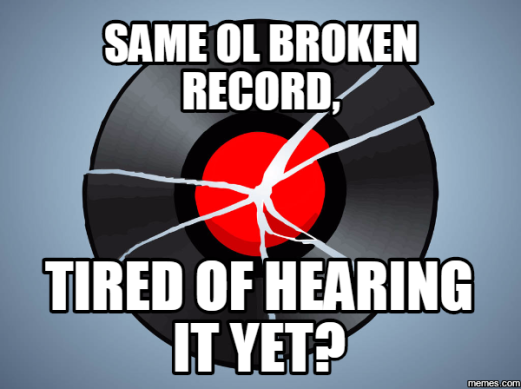
 Another CFS Advisory Committee meeting is upon us. The webinar meeting will be held on June 29th and 30th. And as has been the case in the past, the federal approach to the Committee appears lackadaisical. This bare minimum effort is most evident in the failure to fully staff the committee.
As I noted last December, CFSAC currently has only seven of thirteen members. That’s because the terms of Ms. Collier, Dr. Corbin, Dr. Casillas, and Dr. Fletcher all expired in 2016. In addition, the charter renewed in September 2016 added two new spots on the roster. So there are six empty chairs.
But this is actually not the worst case scenario. Dr. Sue Levine, Dr. Dane Cook, and Dr. Gary Kaplan all reached the end of their terms in May 2017, but they have been extended until November 2017. Clearly this was a last ditch effort to maintain the bare minimum quorum (and save face). Without extension of those terms, CFSAC would have been down to only four of thirteen members.
What about new members? There have been two calls for nominations, one in April 2016 and another in October 2016. Back in September, I reported that some nominations were working their way through the system. Why aren’t any of those nominations approved and ready to go? Beats me. Like I said, lackadaisical.
But new developments show it is worse than that. The four nominations received by CFSAC in response to the April 2016 call were Dr. Cindy Bateman, Dr. Nancy Klimas, Dr. Lenny Jason, and Mary Dimmock. I learned this through a FOIA request. But it turns out Dr. Ken Friedman also submitted a nomination last April. After I reported those four names in September, Ken contacted me and provided proof that he had emailed his nomination. But that information was not included in the FOIA response.
We’ve seen information go missing before, so I filed a new request asking for production of whatever HHS had received from Ken, along with any other nominations that may have slipped through the cracks.
I received a phone call from the HHS FOIA office this month. Despite the fact that I provided proof that Ken submitted his nomination by email, and despite the fact that HHS accepts that proof, there is no record anywhere of his nomination. The FOIA Officer told me that an extensive search was made, including the involvement of IT personnel, but no record of the email exists on government servers. And no explanation could be offered.
The FOIA Officer also told me that to remedy the situation, Ken would be invited by telephone to resubmit his nomination. But when I checked with Ken . . . . you guessed it. He had not received the phone call (he has since resubmitted his nomination anyway).
In a move that can only be described as placating, the FOIA Officer also told me that the nomination process was being changed. From now on, nominees will be told to contact the office if they do not receive confirmation within 24 hours of sending nominations. If they do not receive that confirmation, they will be given another person’s email address for their submissions, with confirmation to follow.
This “improved” process does not make up for the erasure of Ken’s nomination, nor does it guarantee that future nominations won’t digitally vaporize.
And the real question is: why is it taking more than a year to appoint new members to the committee? CFSAC cannot function with only half a roster. Sure, the committee has a quorum but that’s it. Working groups are hamstrung by a lack of committee members, as is the work of formulating and approving recommendations.
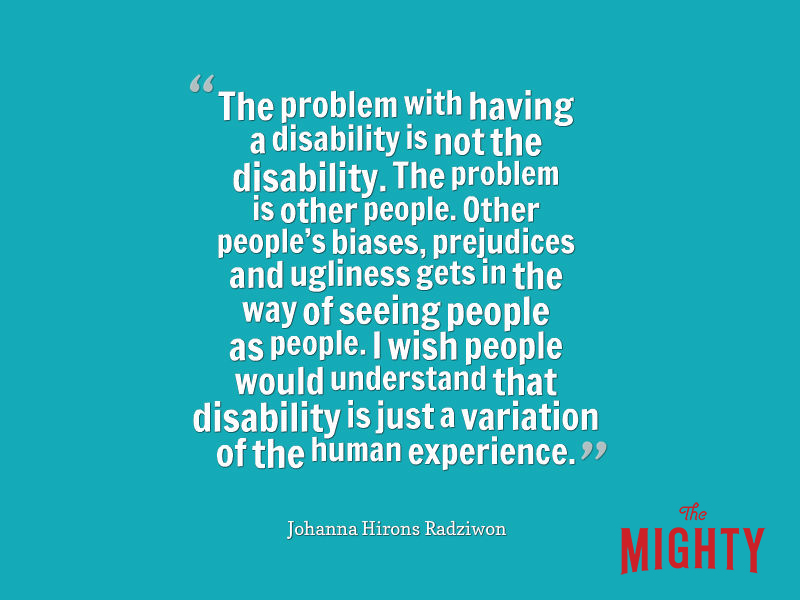
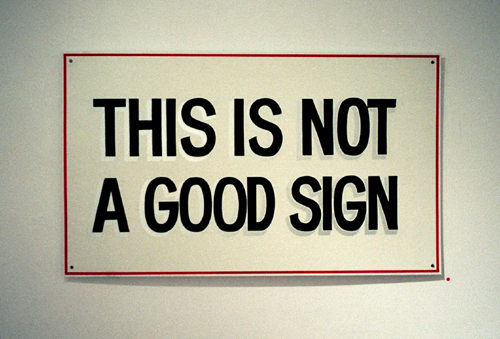
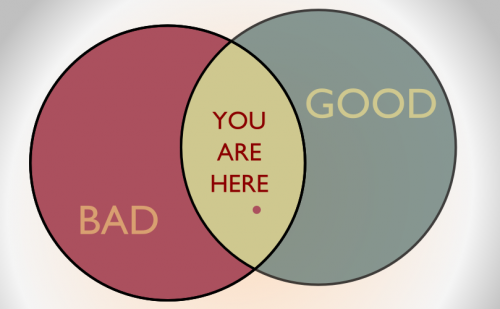
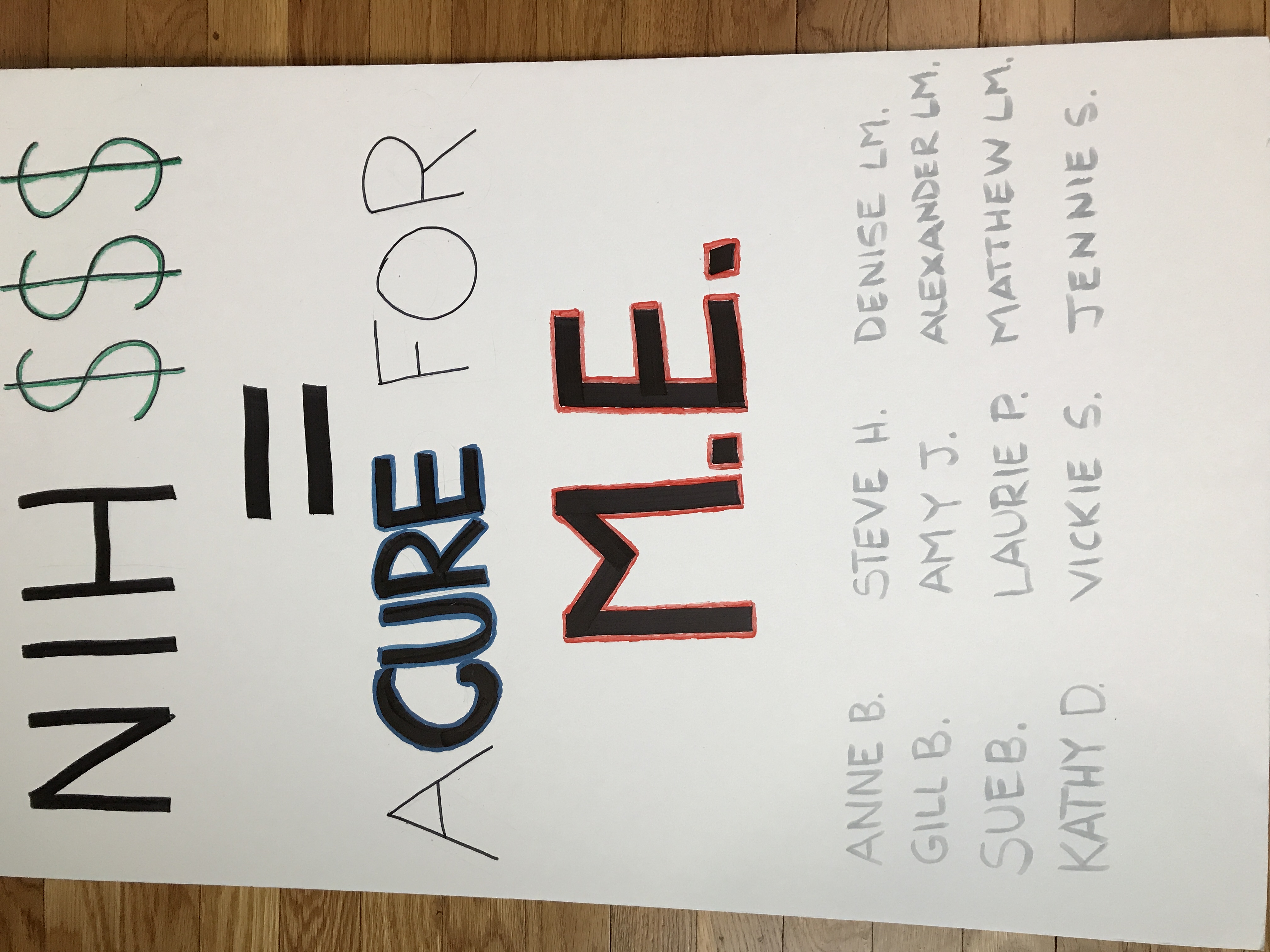
So why are we in this situation? Why do we have only half a committee, while nominations are lost or languish in the approval process? Because business as usual for the federal management of CFSAC is like a sloth working at the DMV:






Book Review: Through the Shadowlands
I have read this book from two perspectives. First, I had the opportunity to read Julie’s early drafts and provide feedback as her friend. But before publication, I was able to read the final version from start to finish with the perspective of a reviewer, and I offer my comments here.
The first thing to know about this book is that Julie can write. She tells her story with honesty and clarity, and the narrative tugs the reader along her winding path from childhood through illness and on to the other side. Julie can explain facts and details so clearly, and then write passages like, “The straw of my house gleamed golden against the brown patches of mud plaster, as if the house were the love child of the sun and the earth.” The experience of reading this book is a pleasure.
Julie’s story of getting sick, and how her life began to shrink, will feel very familiar to people with ME. She describes knowing, “Something is really, really wrong with me.” We’ve all had that moment – before diagnosis, perhaps even before seeking medical care. Each of us has that point of recognition that our bodies have shifted out of health in a serious and fundamental way. And Julie entered the same labyrinth that so many of us did: the trips to different doctors, the suggestion or diagnosis of a psychological problem, the lack of scientifically established treatments. She faced victim blaming, where someone insists that if the suggested treatment didn’t work then she must not be trying hard enough, or must not want to get well. We’ve all been there.
But Julie isn’t just talking to ME patients with this book. In fact, I think she is talking primarily to people not familiar with ME. That audience will feel, along with Julie, what this is like. She writes, “I tried to explain that running off after every quack treatment my friends pushed on me just made me feel desperate and hopeless. The reality was that nobody knew what to do about this fucking disease — if they did, I would have heard about it by then.” I wish I could have been so clear with the dozens upon dozens of people who have tried to push answers on me over the years.
Despite choosing to accept her reality, Julie does not stop looking for answers and rejecting ideas that do not make sense to her. Supplements are a way to part the “gullible” from their money. She found people who wore magnets in their underwear or relied on homeopathy or wore devices that zapped electricity through the wrist. But other ideas do not sound so strange to her, like a shamanic journey or mold avoidance or consulting a psychic.
And this will be one of the challenging parts of Julie’s story for people to accept. Realizing that science was not going to provide her with answers, she decided to try a “Hail Mary pass” and test whether mold was making her sick. She chose mold based on her intuition. For some reason she cannot articulate, trying mold avoidance felt right when magnets and supplements sounded wrong.
After spending two weeks in the desert, Julie finds that she does react immediately and strongly to mold (or something else in the environment). And showers bring near instant relief from the worst of the symptoms. Over and over, she experiences sudden, crippling attacks and is restored by showers or other decontamination methods. Julie deftly explains the science behind mold reactivity (while noting that so much more science is needed), and theories for why her reaction could be so severe and resolve so dramatically. There is no proof beyond her self-experimentation, but there can be no denying that this is true for her.
Julie’s mold avoidance actually increases her sensitivity, and the severity of her reactions. There are a number of frightening episodes, but she clings to the fullness of life as she navigates through them. Despite her illness, Julie resumes her career, meets a new man, and travels internationally. I think she shows extraordinary courage, living her life and trusting that she will be able to handle whatever the illness throws at her.
One of the remarkable things about Julie’s story is the way she balances seemingly inconsistent points of view. She tackles mold avoidance scientifically, but also holds herself open to emotional and spiritual approaches. She is constantly questioning herself and her interpretations of her experiences. Julie is willing to try things, even if they sound a little wacky, and then thoughtfully integrate what she learns. This is an extraordinarily difficult thing to do, and even more difficult to explain well. Julie does both. Through experimentation, Julie is able to reduce her reactivity to mold and regain much functionality. She is not cured, but she is much improved.
Mold avoidance is controversial, both inside and outside the ME community. And Julie is clear that, “My experience obviously does not establish that ME/CFS as a whole is caused by mold or related contaminants, and I strongly doubt that’s true. Accurately assessing how many ME/CFS patients are affected by mold is impossible at this point.” Julie is simultaneously adamant that there is a scientific basis to mold sensitivity, and that much more science and funding is needed to find answers for all ME patients.
Through the Shadowlands speaks an important truth to the world. Julie tells the truth about what it is like to live with ME in ways that patients will identify with and that outsiders will understand. She makes the case for why current medical care and PACE-like models are atrociously bad. And Julie’s determination to seize life to her fullest ability is an example of courage to everyone.
My favorite parts of Through the Shadowlands are the passages where Julie describes her connection to the earth. I have always felt a deep well of connection to nature, and I recognize the same in Julie’s description of her time in Death Valley:
Through the Shadowlands is an honest and moving account of what it is like to have ME, and to live a real life with it. In my opinion, both the ME community and those who have never heard of us can learn something from Julie’s story.