
PACE-Gate

opendataIt is International ME/CFS Awareness Day, and what is most on my mind is the status of PACE-Gate: the controversy over the design, conduct and results of the PACE trial. PACE is the largest clinical trial in ME/CFS, and it compared graded exercise therapy, adaptive pacing, supportive medical care, and cognitive behavioral therapy (explicitly targeting patients’ false beliefs about their illness). The first paper on the results was published in The Lancet in 2011, but there are dozens of flaws in the design and conduct of the study. Requests for data and reanalysis of conclusions are in process across many fronts. While PACE is of intense interest to the ME/CFS community because its results have been used as the basis of treatment recommendations, the issues have significant implications beyond ME/CFS for both scientists and the journals involved.

PACE-Gate was launched by academic/journalist David Tuller, DrPH (Lecturer at the School of Public Health and Graduate School of Journalism at University of California, Berkeley) with his 2015 article series, Trial By Error, which dismantled the bad science in PACE. Tuller was assisted by the work of many “citizen scientists,” ME/CFS patients who worked for years to carefully analyze the study and as much data as they could obtain.

For five years, ME/CFS patients have known and insisted that the results of the study  – even if it had been perfectly designed and conducted – are not applicable to us because the subjects were fatigued, and were not all suffering from ME/CFS. But as Dr. Tuller covered in such detail, the study was the opposite of perfectly designed and conducted. Subjects could worsen during the course of the trial and still be counted as recovered at the end because of post hoc changes in study design – and that is just one of dozens of fundamental flaws in the PACE trial. Yet still, the study is hailed as the largest clinical trial in our disease and as proof that we only need to exercise and shed the “belief” that we are sick in order to recover. Reminiscent of launching a thousand ships, Dr. Tuller’s articles kicked the bad science scandal into high gear, and efforts to expose the truth about PACE began to multiply.

Attempts to secure data from the PACE trial – anonymized to protect patients, of course – are of interest to scientists inside and outside the world of ME/CFS. As they have done for years, the PACE authors continue to block these efforts. In November 2015, Dr. James Coyne (Professor of Health Psychology at University Medical Center, Groningen, the Netherlands) filed a request for the data from the PLoS ONE article on the cost-effectiveness of the treatments evaluated in the PACE trial. King’s College London refused the request, claiming it was “vexatious.” This set off a flurry of protests from scientists, including those at Retraction Watch who called the reasons for rejection “absurd.” Dr. Coyne made PLoS aware of his request, since its policies require authors to make data available for papers published in PLoS journals. As of May 9, 2016, Dr. Coyne has still not received the data, and it is unclear if PLoS will actually enforce its data sharing policy. Dr. Coyne told me, “I am leaving things in PLoS’s hands. I am considering a range of responses if the Journal does not produce the data or retract the paper.”

Graphic credit: Radhika Bhatt, U.S. Department of Commerce Data Service

Graphic credit: Radhika Bhatt, U.S. Department of Commerce Data Service

In December 2015, Dr. Tuller was joined by Dr. Vincent Racaniello (Professor of Microbiology and Immunology, Columbia University), Dr. Ron Davis (Professor of Biochemistry & Genetics, Stanford University) and Dr. Bruce Levin (Professor of Biostatistics, Columbia University) in filing a request for “the raw data for all four arms of the trial” on the original primary outcomes and measures of recovery. This request was denied by Queen Mary University of London in January 2016. Dr. Tuller told me that they appealed this decision, but QMUL declined to undertake a review. Tuller and the other scientists filed an appeal with the Information Commissioner’s Office, but they expect it to take many months for the ICO to come to a decision.

Valerie Eliot Smith has been tracking the slow progress in the case of another PACE data request to QMUL. Alem Matthees filed a request for PACE data, QMUL refused, and he appealed to the ICO. The Information Commissioner ruled in his favor, but QMUL appealed that decision to the First-Tier Tribunal (Information Rights). That hearing was held at the end of April and a decision is expected very soon.

In the absence of direct access to the data, multiple requests for independent review of the PACE data have been made. In November 2015, Dr. Vincent Racaniello and five colleagues published an open letter to Dr. Richard Horton, Editor of The Lancet, urging the publication to “seek an independent re-analysis of the individual-level PACE trial data.” After three months without a response from Dr. Horton, Dr. Racaniello published the open letter again, this time joined by an additional thirty-six scientists. Dr. Racaniello told me that Dr. Horton “invited us to submit it as an ‘official’ letter to Lancet, which would be published; and we did that. No response from him or Lancet yet.” Dr. Horton did not respond to my request for comment on when this letter will be published.

wheelchair_protestAt the same time, twelve U.S. ME/CFS organizations asked the Centers for Disease Control and the Agency for Healthcare Research and Quality to examine the issues raised in Dr. Tuller’s investigation. In part, the organizations asked that the CDC remove all recommendations based on the PACE trial from its medical education material, and asked AHRQ to revise its systematic evidence review in light of the concerns regarding the PACE trial and the Oxford case definition. Mary Dimmock informed me that AHRQ agreed to “reanalyze results by case definition and also separate out CBT from general counseling,” but there is no timeline for this revision of the systematic review.

Advocates have not been silent, either. More than 2,200 people joined in the requests of CDC and AHRQ. More than 12,000 people signed an MEAction petition demanding retraction of claims made in PACE papers in The Lancet and Psychological Medicine, and further asking that independent researchers be given full access to the anonymized raw data from the trial.

I asked Dr. Tuller where he thinks the PACE controversy is headed. He said, “I have to believe that the scientific community will gradually demand that it get retracted or the pressure to release the data will be so overwhelming that QMUL will finally decide that its institutional interests diverge from those of the authors. Perhaps the tribunal will make a strong argument in favor of data release–or perhaps the opposite. I don’t know.”

ignoreDr. Racaniello was not as optimistic. He said, “I think they are going to ignore, obfuscate, and give their usual responses until we are all dead. I don’t have hope that the PACE authors, or Lancet, will respond in any meaningful way until there is more of an outcry.”

What can we do? Dr. Racaniello said, “Share David Tuller’s articles on what is wrong with the study. If these are too complex, use his bullet point summaries. The patient community has been active but we need more scientists and physicians to weigh in on the problem.”

I think the opinions of scientists are the key to a solution here. Dr. Racaniello told me, “I think it’s bad science that was poorly reviewed. Why Lancet is not willing to re-investigate is a mystery.” The Lancet  has faced this problem before. PLoS appears to be back pedaling from enforcing its own data sharing policies. The PACE authors and their universities are refusing every data request at every turn. And unlike the previous five years, the Lancet, PLoS, PACE authors, and universities are not doing this to allegedly vexatious patients who are allegedly part of an allegedly vast conspiracy to make their lives difficult. The Lancet, PLoS, PACE authors and universities are doing it to scientists not previously associated with ME/CFS.

My experience as an ME/CFS advocate has taught me that this disease is the perfect case study for many issues in research, policy and medical care. The PACE trial is one such example. All scientists who care about strong peer review, open data, and verification of results should care about PACE, even if they don’t give a hoot about ME/CFS. Anyone who cares about translating good science into policy, medical education and healthcare should care about PACE, even if they are not interested in ME/CFS.

But as I said last year, and I say again this year: We will not see the change that we need and the resource investment that we need until we find a way to leverage the awareness into action. As advocates, we should do everything we can to communicate about the PACE issues to scientists outside the ME/CFS community. They can help boost the signal enough to get the Lancet, PLoS, PACE authors and universities to pay attention and take the necessary actions to bring PACE-Gate to the correct conclusion.

Posted in Advocacy, Commentary, Research | Tagged , , , , , , , , , , , , , , , , , , , | 9 Comments

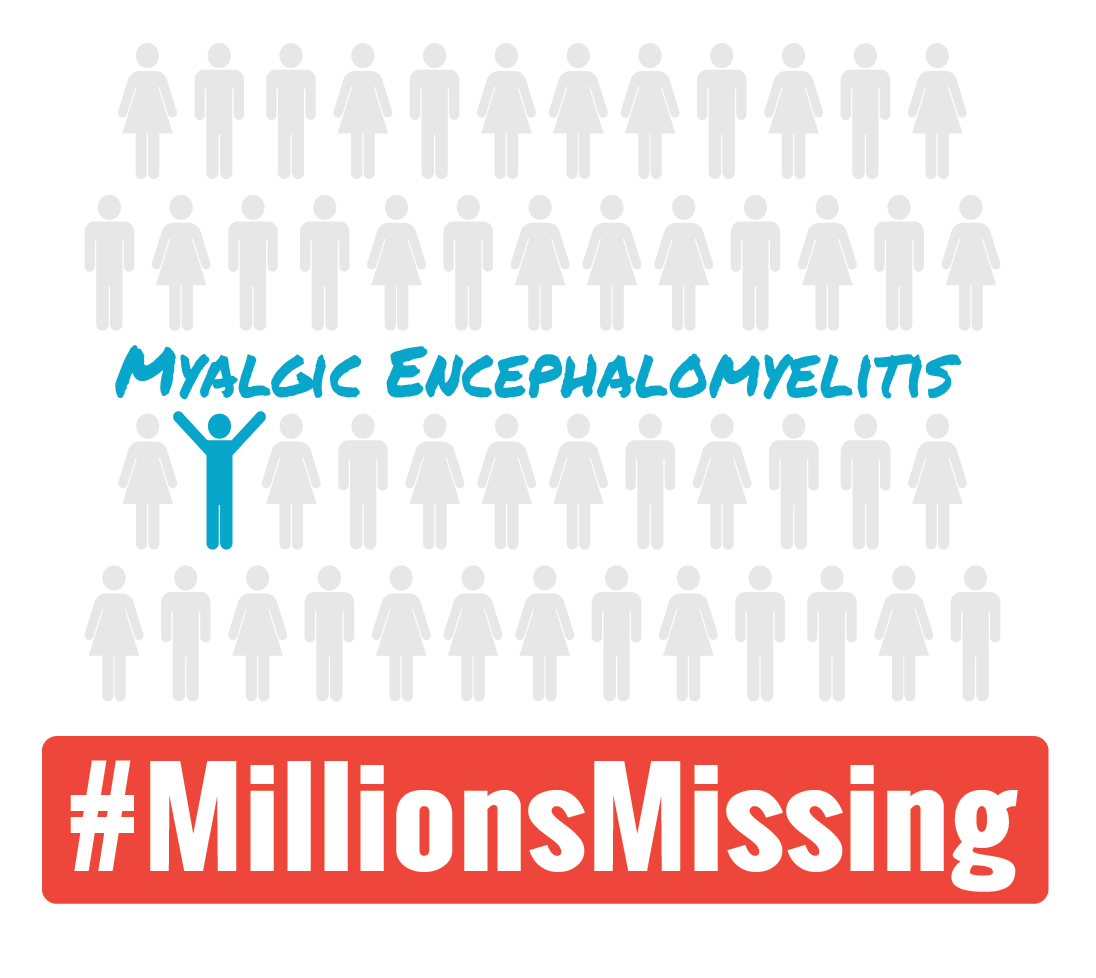
#MillionsMissing

MillionsMissing graphic 1For as long as I have been an ME/CFS advocate, I have heard people say we should protest/take to the streets/be more like ACT UP. But for the most part, demonstrations have been small (even one woman) shows. That is not to say these actions have not been worthwhile or important. They’ve been both.

But #MillionsMissing is something new. Organized by MEAction, the #MillionsMissing project will take place in multiple cities on May 25, 2016, with a coordinated campaign of demonstrations and demands.

The #MillionsMissing demands are straightforward:

  1. Funding and program investments commensurate with the disease burden
  2. Clinical trials to secure medical treatments for ME/CFS
  3. Replacement of misinformation with accurate medical education and clinical guidelines
  4. HHS leadership, oversight and a serious commitment to urgently address ME/CFS

These are goals that our entire community can get behind. Action on these four fronts is desperately needed, and this is the only path forward to restore the millions of people missing from their careers, schools, social lives and families due to this debilitating disease.

I cannot attend a protest in person, but I have sent my favorite pair of pumps from my days working in a law office in my place. I miss my career, even twenty-one years after I lost it to this disease. I will also be participating in the virtual protest on May 25th. I sincerely hope you will join me in whatever capacity you can.

Posted in Advocacy | Tagged , , , , , , , , , , , , , , , , , , | 9 Comments

RFA Ticker, 5/9/16

ticker

We observe International ME/CFS Awareness Day this week, and there are still #MillionsMissing in essential research dollars.

  • Total RFAs Issued by NIH: 210 (October 2015 to date)
  • Total Dollars Committed to RFAs: $1,996,940,000 (October 2015 to date)
  • Total RFAs for ME/CFS: ZERO (October 2015 to date)
Week Beginning RFAs Issued Total Commitment RFAs for ME/CFS
5/2/16 8 $32,485,000 Zero
4/25/16 4 $7,500,000 Zero
4/18/16 10 $42,230,000 Zero
4/11/16 4 $6,825,000 Zero
4/4/16 8 $27,000,000 Zero
3/28/16 13 $161,000,000 Zero
3/21/16 1 $2,700,000 Zero
3/14/16 5 $23,650,000 Zero
3/7/16 9 $82,710,000 Zero
2/29/16 1 $1,890,000 Zero
2/22/16 9 $30,100,000 Zero
2/15/16 4 $26,500,000 Zero
2/8/16 5 $9,500,000 Zero
2/1/16 8 $26,000,000 Zero
1/25/16 4 $9,300,000 Zero
1/18/16 2 $4,500,000 Zero
1/11/16 10 $71,200,000 Zero
1/4/16 0 $0 Zero
12/28/15 0 $0 Zero
12/21/15 3 $10,260,000 Zero
12/18/15 5 $20,260,000 Zero
12/11/15 27 $765,090,000 Zero
12/4/15 6 $26,600,000 Zero
11/27/15 4 $21,000,000 Zero
11/20/15 15 $134,400,000 Zero
11/13/15 2 $16,100,000 Zero
11/6/15 10 $22,850,000 Zero
10/30/15 7 $49,800,000 Zero
10/23/15 10 $33,200,000 Zero
10/16/15 0 $0 Zero
10/9/15 13 $332,450,000 Zero

If you want more background on the RFA Ticker, read the inaugural post.

Posted in Advocacy, Research | Tagged , , , , , , , , , , , | 3 Comments

Staying the Course to Where?

which wayDr. Francis Collins, Director of the National Institutes of Health, made a request of the ME/CFS community. During the March 8, 2016 NIH telebriefing, Dr. Collins said:

So please take our commitment with great seriousness. Please also stay the course with us as we seek to identify the most compelling research questions and how we could address those. (emphasis added)

But what precisely is the course Dr. Collins has asked us to stay on? We cannot answer that question yet, but we can begin to sketch out the map. We can also identify the elements we expect. Looking across the various communications from NIH to the public in the last several months, here is the outline I see:

Clinical Care Study

The NIH has already designed and has begun executing a study at its Clinical Care Center. There are so many issues and questions about this study, including the risk of bias, the design of the exercise test, patient selection, and more. I refer you to the webinar with Dr. Avi Nath, the principal investigator, in which he addresses some of these issues.

I hope to cover the study in more detail in a future post. But one thing to keep in mind is how long this study will take. Data collection for phase one will take approximately two years. Analysis and writing up results will take longer. And there are two additional phases after that. I don’t think we’ll see even preliminary data until the end of 2017, at the earliest.

Short term plan to activate research

Dr. Vicky Whittemore made general references to a short-term plan for research on the NIH telebriefing. She said, “We are in the process of putting together . . .  both a short-term plan, where we can try to activate some research on the shorter-term as well as initiative that would put in place better infrastructure as well as research funding for longer-term research projects.” Dr. Whittemore also said that the research plan would be presented “to the appropriate council for approval in the May time frame.”

The specifics of what this plan will include is anybody’s guess. Dr. Whittemore did note that the Trans-NIH ME/CFS Working Group has been discussing the importance of biomarkers, understanding the underlying causes of ME/CFS, and understanding the cognitive dysfunction associated with the disease. But there are so many more areas that need investigation, including characterization and evaluation of post-exertional malaise, investigating the possible autoimmune connection, expanding the systems analysis of neurological and immunological gene expression, genome wide association studies, and clinical trials. In fact, the P2P report includes a long list of areas of inquiry.

It is also important to note that this plan appears to have been put together by NIH alone. It is unclear if NIH has consulted anyone outside the Institutes for advice and direction. And there has certainly been no systematic collection of public input (although advocates have been offering their thoughts). We also don’t know if the plan will be released in its entirety, or if announcements will be limited to specific initiatives. The last time the Trans-NIH Working Group created any kind of plan was after the State of the Knowledge meeting in 2011, and NIH steadfastly refused all requests to see that plan.

Requests For Applications (RFAs)

RFAs are a big deal to us because they set aside funds for particular projects or areas of inquiry. The last RFA for ME/CFS was 10 years ago. Advocates and researchers have been clamoring for another ever since. It seems like we will, at last, get our wish.

Dr. Walter Koroshetz would not commit to RFAs on the telebriefing, but he said, “I think as a short-term process that we definitely have to stimulate with funds that are particularly for ME/CFS and Dr. Collins is clearly behind that.” Afterwards, NIH issued revised responses to CFSAC’s August 2015 recommendations, stating, “The Trans-NIH ME/CFS Working Group is in the final stages of putting together a comprehensive research strategy for ME/CFS research that will include new RFAs.” (emphasis added)

This is good news! But it is nonspecific news. We will have to wait for the announcement to find out how much money will be allocated and over what period of time.

Long term plan with coordination

It’s a bit fuzzier trying to map out what will happen over the long-term. Dr. Koroshetz said, “But I would also emphasize once again that this is a stepping stone. . . . what our intention is, is to coordinate it with many of the other pieces that we’re going to start initiating across the country.”

He talked about organizing researchers around the country, and that the community should work with investigators at universities and clinics. Such groups would then submit funding applications. I think this could take many forms, and not all would be equally helpful.

Common Data Elements and a Data Coordinating Center

In the revised responses to CFSAC, NIH said it will develop Common Data Elements for use in all studies. NIH also said the Trans-NIH Working Group is exploring the feasibility of a Data Coordinating Center. This represents a change from NIH’s previous position. In response to CFSAC’s recommendations from June 2014, NIH said “developing and maintaining a unique ME/CFS database is cost prohibitive in light of the small number of ME/CFS researchers.”

CDEs and a central data repository are much needed, especially given that ME/CFS specialists and researchers are scattered across the country with limited systematization of data collection. Again, we await specifics.

stay the courseMy Roadmap

In order to decide if we will “stay the course” with NIH, we should have a sense of what we think that course should look like. These are the components of a course that I would be glad to stay on with NIH:

First, NIH should share its research plan with the public. Not only does this increase transparency and accountability, but it will be another small signal that NIH wants to improve its relationship with the ME/CFS advocacy and research community.

Second, NIH should begin with a three year sequence of RFAs. Starting with $10 million this year, and ending with $20 million in 2018, the RFAs should support validation of biomarkers, early clinical trials, and infrastructure. NIH should then evaluate results to appropriately target future RFAs.

A sequence of RFAs is essential. Our last RFA was one and done, and it has taken 10 years to get NIH to agree to do it again. We cannot wait 10 years between RFAs. Furthermore, dedicated funding over several years is necessary to convince researchers that NIH is serious about its focus on ME/CFS and to attract new researchers to the field. As long as the perception lingers that NIH does not really want to invest in this disease, we will not see research move forward with any increased speed.

Finally – and this might be obvious but should be explicitly stated – we need the first RFA to be this year. NIH cannot wait for the completion of phase one of the Clinical Care study to shape RFAs. That means waiting two years or more, and it is completely unacceptable.

Third, NIH must fund Centers of Excellence. This might be what Dr. Koroshetz was referring to when he talked about coordinating efforts across the country. NIH should help recruit three major universities within two years to combine ME/CFS expert clinical care, research, and clinical trials under one roof. These Centers should also participate in the creation of Common Data Elements and the Data Coordinating Center. We need NIH’s support and a plan of how we will get these Centers up and running.

Fourth, NIH must incorporate public input in planning and executing ME/CFS research initiatives. Dr. Nath said during his webinar that the “extramural folks” were “approaching people and putting together a panel.” I confirmed with Dr. Whittemore that they are working on this, but she had no further information to release at this time. It is absolutely critical that NIH consider the range of views among patients, advocates, clinicians and researchers – and meaningfully incorporate that input into designing RFAs, studies, data elements, and future initiatives.

Fifth, NIH must bring stakeholders together to agree upon a basic research case definition, that can then be refined for the needs of particular studies. This is what the P2P Panel recommended, but case definition has been completely absent from NIH communications thus far. NIH says it wants to recruit new researchers to this area, but those researchers need direction on which disease is the target. We need to put a stake in the ground on this issue and move forward.

Finally – and I realize this is not the nature of government – we need a sense of urgency. NIH announced its renewed focus on ME/CFS in October 2015. We’re hoping to hear a plan in May 2016 (although no announcement date has been set). The Clinical Care Center study will not yield data for several years. RFAs take time to produce grants, and those grants take time to produce results. I want to see the NIH move much more quickly and with a greater recognition of the urgent need for progress. We’ve already waited thirty years. That’s long enough.

Posted in Advocacy, Commentary, Research | Tagged , , , , , , , , , , , , , , , , , , , | 17 Comments

RFA Ticker, 5/2/16

ticker

The last week of April was not the lightest week for RFA’s, but it was pretty close. Three of those RFAs came from the Office or Research Infrastructure Programs in the Office of the Director. NIH has now issued over 200 RFAs this fiscal year, and we inch ever closer to $2 billion.

  • Total RFAs Issued by NIH: 202 (October 2015 to date)
  • Total Dollars Committed to RFAs: $1,964,455,000 (October 2015 to date)
  • Total RFAs for ME/CFS: ZERO (October 2015 to date)
Week Beginning RFAs Issued Total Commitment RFAs for ME/CFS
4/25/16 4 $7,500,000 Zero
4/18/16 10 $42,230,000 Zero
4/11/16 4 $6,825,000 Zero
4/4/16 8 $27,000,000 Zero
3/28/16 13 $161,000,000 Zero
3/21/16 1 $2,700,000 Zero
3/14/16 5 $23,650,000 Zero
3/7/16 9 $82,710,000 Zero
2/29/16 1 $1,890,000 Zero
2/22/16 9 $30,100,000 Zero
2/15/16 4 $26,500,000 Zero
2/8/16 5 $9,500,000 Zero
2/1/16 8 $26,000,000 Zero
1/25/16 4 $9,300,000 Zero
1/18/16 2 $4,500,000 Zero
1/11/16 10 $71,200,000 Zero
1/4/16 0 $0 Zero
12/28/15 0 $0 Zero
12/21/15 3 $10,260,000 Zero
12/18/15 5 $20,260,000 Zero
12/11/15 27 $765,090,000 Zero
12/4/15 6 $26,600,000 Zero
11/27/15 4 $21,000,000 Zero
11/20/15 15 $134,400,000 Zero
11/13/15 2 $16,100,000 Zero
11/6/15 10 $22,850,000 Zero
10/30/15 7 $49,800,000 Zero
10/23/15 10 $33,200,000 Zero
10/16/15 0 $0 Zero
10/9/15 13 $332,450,000 Zero

If you want more background on the RFA Ticker, read the inaugural post.

Posted in Advocacy, Research | Tagged , , , , , , , , , , , | 1 Comment

RFA Ticker, 4/25/16

ticker

NIH issued more than $42 million in new RFAs last week. My question is whether RFAs will crack $2 billion before ME/CFS finally gets its own.

  • Total RFAs Issued by NIH: 198 (October 2015 to date)
  • Total Dollars Committed to RFAs: $1,956,955,000 (October 2015 to date)
  • Total RFAs for ME/CFS: ZERO (October 2015 to date)
Week Beginning RFAs Issued Total Commitment RFAs for ME/CFS
4/18/16 10 $42,230,000 Zero
4/11/16 4 $6,825,000 Zero
4/4/16 8 $27,000,000 Zero
3/28/16 13 $161,000,000 Zero
3/21/16 1 $2,700,000 Zero
3/14/16 5 $23,650,000 Zero
3/7/16 9 $82,710,000 Zero
2/29/16 1 $1,890,000 Zero
2/22/16 9 $30,100,000 Zero
2/15/16 4 $26,500,000 Zero
2/8/16 5 $9,500,000 Zero
2/1/16 8 $26,000,000 Zero
1/25/16 4 $9,300,000 Zero
1/18/16 2 $4,500,000 Zero
1/11/16 10 $71,200,000 Zero
1/4/16 0 $0 Zero
12/28/15 0 $0 Zero
12/21/15 3 $10,260,000 Zero
12/18/15 5 $20,260,000 Zero
12/11/15 27 $765,090,000 Zero
12/4/15 6 $26,600,000 Zero
11/27/15 4 $21,000,000 Zero
11/20/15 15 $134,400,000 Zero
11/13/15 2 $16,100,000 Zero
11/6/15 10 $22,850,000 Zero
10/30/15 7 $49,800,000 Zero
10/23/15 10 $33,200,000 Zero
10/16/15 0 $0 Zero
10/9/15 13 $332,450,000 Zero

If you want more background on the RFA Ticker, read the inaugural post.

Posted in Advocacy, Research | Tagged , , , , , , , , , , , | 2 Comments

How I Sleep At Night

Sleeping Beauty by Henry Meynell Rheam

Sleeping Beauty by Henry Meynell Rheam

One of the great incongruities of ME/CFS is that despite our bone-crushing brain-stealing fatigue, we are frequently unable to sleep. And if we do sleep, the quality of the sleep is very poor. This quickly sets up an escalating feedback loop where poor quality sleep increases fatigue and other symptoms, which in turn make it difficult to sleep.

The Institute of Medicine report found sleep problems to be so widespread and severe that they made unrefreshing sleep (“feeling as tired upon waking as before going to bed” p. 86) one of the required symptoms for diagnosis. The IOM report includes a great review of evidence of sleep disorders in ME/CFS. Back in 2014, Dr. Cindy Bateman gave a talk on sleep problems, and you can still view the slides from her talk here. Those slides describe my sleep problems to a T:

  • Sleep apnea? Check.
  • Too much pain and fatigue to sleep? Check.
  • Orthostatic intolerance and heart rate variability? Check.
  • Sleeping too much? Check.
  • Difficult falling asleep? Check.

My sleep problems have changed over the last twenty years, and I’ve tried almost every treatment that Dr. Bateman described in her talk. It feels like standing on shifting sand, but over time I have found some things that work for me.*

Medications

For many years, I had difficulty falling asleep. I tried everything: relaxation techniques, benadryl, and finally escalating to prescription sleep medication. One of the challenges with medication is that insurance companies sometimes push back on long prescriptions for drugs like Ambien. You may have to spend some energy justifying the treatment in order to get coverage. I was fortunate that the medications helped my insomnia, and the side effects were tolerable. But I didn’t like sedating myself every night, and welcomed other options. What finally made a difference was adequate pain management. The medications in my pain management regimen also help with sleep, so I’ve been able to wean off the sedating drugs.

Sleep Hygiene

I want to mention this because it’s a bit of a pet peeve of mine. Doctors, especially sleep specialists, preach sleep hygiene, such as no electronics in the bedroom, only using your bed for sleep and sex, and so on. It drives me crazy. Even during my BEST times with this illness, I have spent many waking hours in bed. When a doctor asked me why I go to bed by 7pm, I just stared at her for a moment before saying “Because it’s the only place I can get comfortable and rest.” Where exactly do doctors think we should spend our time? Do you tell someone with the flu that they shouldn’t go to bed until they are ready to fall asleep? I do understand the thinking behind sleep hygiene, and I think we should try to be out of bed if we can. But only if we can. Normal sleep hygiene recommendations simply do not apply to ME/CFS. Ok, rant over.

Sleep Apnea

I was diagnosed with mild sleep apnea a few years into my illness. But my skin was too sensitive to tolerate the silicone mask of a CPAP machine – my skin just sloughed off where the mask touched – so I had to abandon treatment. I was evaluated again a few years ago, and the sleep apnea was significantly worse. There are now cloth masks with no silicone or plastic touching the skin, so I agreed to try CPAP again. I was amazed to find that it helped!

Treating the sleep apnea (and eliminating the many mini-awakenings during sleep) has improved the quality of my sleep, and now I need less of it. Before, I needed at least 10 hours of sleep a night or naps were guaranteed, and I still woke up feeling awful. Now, I can sleep 8 to 9 hours and not need a nap (unless I’m crashing from overdoing my activity).

Important note: If you have sleep apnea, you must be treated with a CPAP machine even if it doesn’t change any symptoms because you are at higher risk of developing cardiovascular disease.

Heart Rate Treatment

After some debate and experimentation, I decided to try a beta blocker to steady my heart rate during the day. The goal was to lower my heart rate (which would allow more activity) and address orthostatic intolerance symptoms. One problem we detected after I started using a heart rate monitor is that I would have episodes of tachycardia and accompanying nausea, dizziness and weakness. This was especially common in the morning.

The beta blockers helped with all those problems – I could be a little more active, and the tachycardia episodes disappeared. What I did not expect was improvement in my sleep. The beta blockers help me fall asleep at night, and control heart rate variability during sleep. This has improved the quality of my sleep, and that has led to much better mornings.

Before/After

Before all these treatments came together, mornings were torture. I had to force myself awake, and spent half an hour in bed talking myself into getting up. For several hours, it was difficult to think. I felt nauseous and dizzy, and it was hard to function.

Once the CPAP machine and beta blockers were in place, this changed. It is still hard to get up in the morning, but it takes much less effort to get myself awake and out of bed. My theory is that these two treatments have taken a load off my heart, and improved the quality of my sleep. This has expanded my capacity activity a little bit overall.  But the big difference is in my morning symptoms: I can think! I can make breakfast! I don’t feel like I’m going to pass out or die!

It is both really important and really challenging to address sleep problems in ME/CFS, particularly because there are so many variations and complications. Based on my personal experience, it takes a lot of tinkering to improve just one aspect of sleep. Even with all of these things in place, I still struggle with feeling unrefreshed when I wake up. But the incremental gains I’ve made by improving my sleep have been worth it.

*One thing I don’t discuss here is the impact of caffeine. Stay tuned for a post on my caffeine experiment.

Posted in Occupying | Tagged , , , | 35 Comments

RFA Ticker, 4/18/16

ticker

It was a light week for RFAs in general, but NIH still committed almost $7 million to areas that are not ME/CFS.

  • Total RFAs Issued by NIH: 188 (October 2015 to date)
  • Total Dollars Committed to RFAs: $1,914,725,000 (October 2015 to date)
  • Total RFAs for ME/CFS: ZERO (October 2015 to date)
Week Beginning RFAs Issued Total Commitment RFAs for ME/CFS
4/11/16 4 $6,825,000 Zero
4/4/16 8 $27,000,000 Zero
3/28/16 13 $161,000,000 Zero
3/21/16 1 $2,700,000 Zero
3/14/16 5 $23,650,000 Zero
3/7/16 9 $82,710,000 Zero
2/29/16 1 $1,890,000 Zero
2/22/16 9 $30,100,000 Zero
2/15/16 4 $26,500,000 Zero
2/8/16 5 $9,500,000 Zero
2/1/16 8 $26,000,000 Zero
1/25/16 4 $9,300,000 Zero
1/18/16 2 $4,500,000 Zero
1/11/16 10 $71,200,000 Zero
1/4/16 0 $0 Zero
12/28/15 0 $0 Zero
12/21/15 3 $10,260,000 Zero
12/18/15 5 $20,260,000 Zero
12/11/15 27 $765,090,000 Zero
12/4/15 6 $26,600,000 Zero
11/27/15 4 $21,000,000 Zero
11/20/15 15 $134,400,000 Zero
11/13/15 2 $16,100,000 Zero
11/6/15 10 $22,850,000 Zero
10/30/15 7 $49,800,000 Zero
10/23/15 10 $33,200,000 Zero
10/16/15 0 $0 Zero
10/9/15 13 $332,450,000 Zero

If you want more background on the RFA Ticker, read the inaugural post.

Posted in Advocacy, Research | Tagged , , , , , , , , , , , | 4 Comments

RFA Ticker 4/11/16

tickerLast week, five Institutes announced interest in receiving applications for administrative supplements for existing grants to increase ME/CFS research. Obviously, it’s not the announcement we’ve been waiting for, but it is a step. Let’s take a closer look at how this will work.

Investigators with existing grants can apply for extra money to run additional tests, recruit ME/CFS subjects, etc. Only five Institutes joined the announcement, but Dr. Vicky Whittemore told me that “PIs can submit an administrative supplement for their grants to the funding Institute at any time – it does not have to be in response to a specific notice like the one that was recently released for ME/CFS.” The participating Institutes set caps for the amount of supplementary funding they will consider, and Dr. Whittemore said that this is due to established Institute policies.

The Trans-NIH ME/CFS Working Group will review all applications under this announcement. Again, Dr. Whittemore said that this is consistent with NIH policy. Supplements are always reviewed internally by program staff, and do not go to study sections like full grant proposals do. Also, there are no specific deadlines associated with the announcement. As Dr. Whittemore said, these applications for supplementary funding can be submitted at any time.

In my opinion, the significance of this announcement is two-fold. First, it’s a reminder to researchers inside and outside the ME/CFS area that additional funding may be available. It would be terrific if this resulted in applications from non-ME/CFS researchers, although that brings its own set of challenges, e.g. will they work with experts and navigate the case definition minefield. At a minimum, currently funded ME/CFS researchers should ALL apply for supplementary funding.

The second significance of this announcement appears in the text itself: “NIH is committed to supporting research to better understand ME/CFS. This notice is one component of this effort.” (emphasis added) The wait for announcements of the other components of NIH’s strategy continues.

While we wait, NIH issued $27 million in new RFAs last week.

  • Total RFAs Issued by NIH: 184 (October 2015 to date)
  • Total Dollars Committed to RFAs: $1,907,900,000 (October 2015 to date)
  • Total RFAs for ME/CFS: ZERO (October 2015 to date)
Week Beginning RFAs Issued Total Commitment RFAs for ME/CFS
4/4/16 8 $27,000,000 Zero
3/28/16 13 $161,000,000 Zero
3/21/16 1 $2,700,000 Zero
3/14/16 5 $23,650,000 Zero
3/7/16 9 $82,710,000 Zero
2/29/16 1 $1,890,000 Zero
2/22/16 9 $30,100,000 Zero
2/15/16 4 $26,500,000 Zero
2/8/16 5 $9,500,000 Zero
2/1/16 8 $26,000,000 Zero
1/25/16 4 $9,300,000 Zero
1/18/16 2 $4,500,000 Zero
1/11/16 10 $71,200,000 Zero
1/4/16 0 $0 Zero
12/28/15 0 $0 Zero
12/21/15 3 $10,260,000 Zero
12/18/15 5 $20,260,000 Zero
12/11/15 27 $765,090,000 Zero
12/4/15 6 $26,600,000 Zero
11/27/15 4 $21,000,000 Zero
11/20/15 15 $134,400,000 Zero
11/13/15 2 $16,100,000 Zero
11/6/15 10 $22,850,000 Zero
10/30/15 7 $49,800,000 Zero
10/23/15 10 $33,200,000 Zero
10/16/15 0 $0 Zero
10/9/15 13 $332,450,000 Zero

If you want more background on the RFA Ticker, read the inaugural post.

Posted in Advocacy, Research | Tagged , , , , , , , , , , , | 2 Comments

RFA Ticker, 4/4/16

ticker
Last week was a big one for RFA news.

NIH issued revised responses to the August 2015 CFS Advisory Committee recommendations. Regarding RFAs, NIH said: “The Trans-NIH ME/CFS Working Group is in the final stages of putting together a comprehensive research strategy for ME/CFS research that will include new RFAs.”  (emphasis added)

So, awesome news, right? Not so fast, cowboy. This is a commitment (which I do applaud) to issue new RFAs. But there are no specifics about amounts and timelines. And that’s what really matters.

What if the new RFAs will not be issued until 2017? 2020? What if the new RFAs are for $1 million? Less? The smallest RFA that NIH has issued since October 2015 is $250,000. A total of 98 RFAs have been for less than $5,000,000. That will not get the job done for ME/CFS.

A written commitment to include new RFAs is a first step. But the amount of money and timeline are very important pieces of information that we do not have yet. Let’s suspend the standing ovation for NIH until we have that information.

In other RFA news, NIH committed a whopping $161,000,000 last week, but none of it was for us.

  • Total RFAs Issued by NIH: 176 (October 2015 to date)
  • Total Dollars Committed to RFAs: $1,880,900,000 (October 2015 to date)
  • Total RFAs for ME/CFS: ZERO (October 2015 to date)
Week Beginning RFAs Issued Total Commitment RFAs for ME/CFS
3/28/16 13 $161,000,000 Zero
3/21/16 1 $2,700,000 Zero
3/14/16 5 $23,650,000 Zero
3/7/16 9 $82,710,000 Zero
2/29/16 1 $1,890,000 Zero
2/22/16 9 $30,100,000 Zero
2/15/16 4 $26,500,000 Zero
2/8/16 5 $9,500,000 Zero
2/1/16 8 $26,000,000 Zero
1/25/16 4 $9,300,000 Zero
1/18/16 2 $4,500,000 Zero
1/11/16 10 $71,200,000 Zero
1/4/16 0 $0 Zero
12/28/15 0 $0 Zero
12/21/15 3 $10,260,000 Zero
12/18/15 5 $20,260,000 Zero
12/11/15 27 $765,090,000 Zero
12/4/15 6 $26,600,000 Zero
11/27/15 4 $21,000,000 Zero
11/20/15 15 $134,400,000 Zero
11/13/15 2 $16,100,000 Zero
11/6/15 10 $22,850,000 Zero
10/30/15 7 $49,800,000 Zero
10/23/15 10 $33,200,000 Zero
10/16/15 0 $0 Zero
10/9/15 13 $332,450,000 Zero

If you want more background on the RFA Ticker, read the inaugural post.

Posted in Advocacy, Research | Tagged , , , , , , , , , , , , | 13 Comments